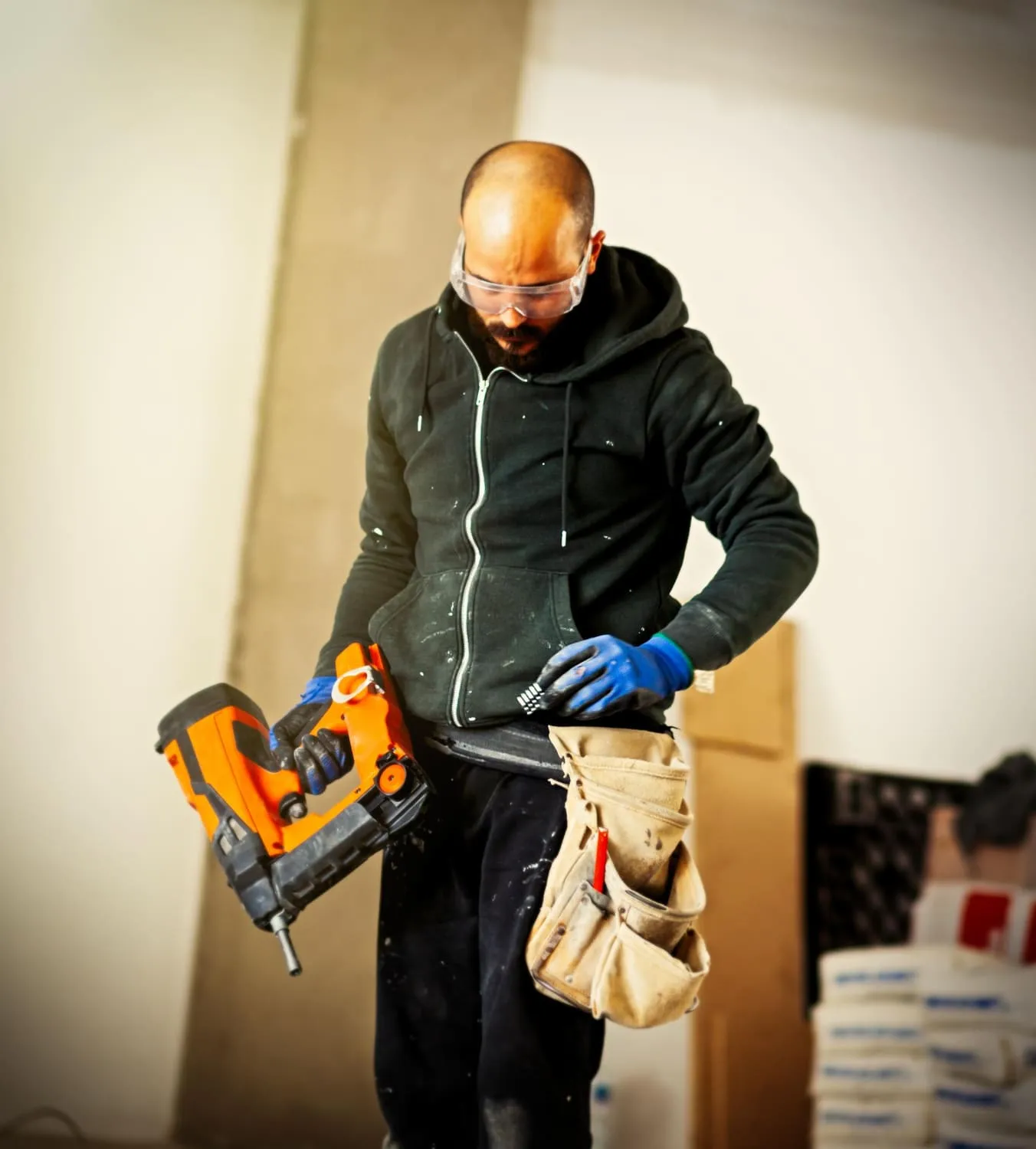
Power tools make DIY faster and more fun, but they don’t forgive mistakes. Most injuries happen in a split second, often to people who were rushing or skipped a basic step. These DIY safety tips for power tools are simple habits that keep your fingers, eyes and ears safe on every project.
Wear the Right Protective Gear
Eye Protection
Safety glasses are non-negotiable. Drilling, cutting and sanding all throw debris at high speed. Choose glasses marked with the ANSI Z87.1 rating, and wear them even for quick jobs.
Hearing and Breathing Protection
Saws, routers and sanders are loud enough to damage hearing over time. Use earplugs or earmuffs. Wear a dust mask or respirator when sanding or cutting materials that create fine dust.
Clothing
Skip loose sleeves, dangling jewelry and long untied hair near spinning tools. Gloves protect your hands when handling rough materials, but take them off near spinning blades and bits where they can be pulled in.
Set Up a Safe Workspace
- Keep the area clean, dry and well lit.
- Clamp your workpiece instead of holding it by hand.
- Make sure cords are out of the cutting path and not a tripping hazard.
- Keep children and pets away from the work area.
12 Power Tool Safety Rules for Beginners
- Read the manual. Every tool has its own quirks and safety features.
- Inspect before use. Check cords, blades, bits and guards for damage.
- Use the right tool for the job. Forcing a tool causes kickback and breakage. Our drill bit guide explains which bit fits each material.
- Unplug or remove the battery before changing blades or bits.
- Keep guards in place. They’re there for a reason.
- Let the tool reach full speed before it touches the material.
- Keep both hands on two-handed tools like circular saws.
- Stand to the side of a saw blade’s path to avoid kickback.
- Don’t overreach. Keep your footing stable and balanced.
- Never carry a tool by its cord.
- Stay focused. Don’t use power tools when tired, distracted or in a hurry.
- Store tools safely with batteries removed and blades covered.
Drill Safety Tips
Hold the drill firmly with both hands for large bits, because they can grab and twist your wrist. Before drilling into walls, check for wires and pipes with a stud finder that detects them. Our light switch safety guide explains how to use a voltage tester.
Saw Safety Tips
Support long boards on both sides of the cut so the blade doesn’t bind. Check that the blade is sharp, since dull blades need more force and are more likely to kick back. Wait for the blade to stop completely before lifting the saw.
Battery and Cord Safety
Use the charger that came with your tool’s batteries and don’t leave them charging overnight on a cluttered bench. Replace any battery that’s swollen, cracked or gets unusually hot. For corded tools, use a properly rated extension cord and plug into a GFCI outlet outdoors or near water.
What to Do If Something Goes Wrong
Keep a basic first-aid kit in your workspace and know where it is. For serious cuts, eye injuries or electric shocks, seek medical help right away. Treat any tool that sparked, smoked or shocked you as broken until a professional checks it.
Build Safe Habits From Day One
Good habits are easier to build than to fix later. Start with the basics in our essential DIY tool kit for beginners, practice on simple DIY furniture projects, and keep this list somewhere you’ll see it every time you pick up a tool. You can also download our free DIY mastery method PDF, which includes a safety checklist.